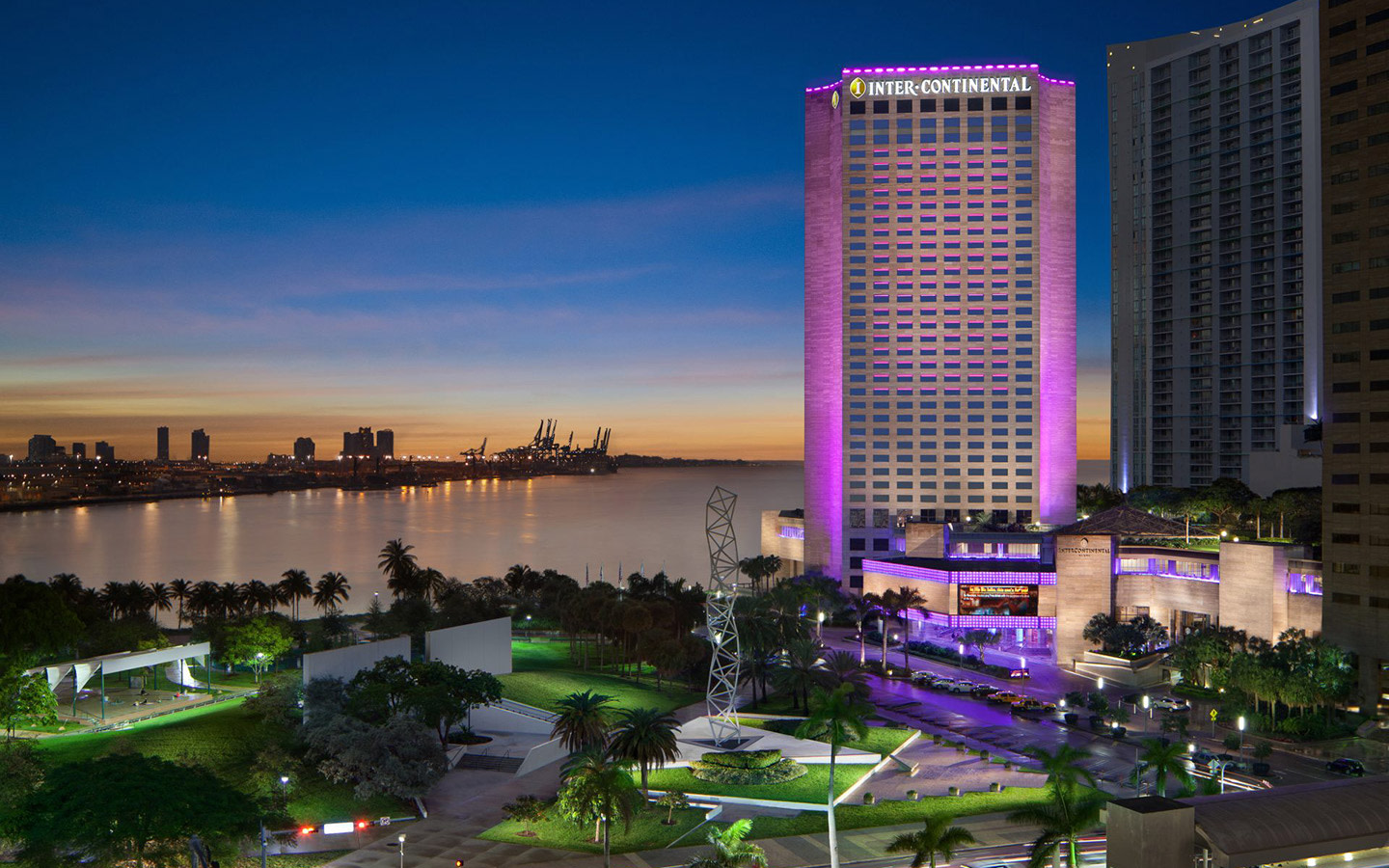
Core Planning Priorities for InterContinental Miami
Downtown Miami and Biscayne Bay urban core dynamics
Venue-specific meeting platform coordination
Integration with the GMCVB supplier directory categories
Alignment with connected Miami-Dade and Broward strategies
Operational distinctions from beach and airport clusters
Support for investor, product-launch, and sponsor events
Attention to urban routing and logistics timing
Strategic Placement in the Downtown Miami Meetings Cluster
The Downtown, Brickell, and Biscayne Bay core forms one of four primary venue clusters serving South Florida's trade show and conference demand. Led by convention hotels and urban conference facilities, this district supports programs that capitalize on high-visibility business environments and immediate proximity to financial, cultural, and hospitality assets. The InterContinental Miami contributes to this ecosystem by offering a bayfront location that facilitates events blending professional objectives with the area's Live Work Vacation appeal. Its role emphasizes targeted corporate sessions and experiential activations rather than the large-scale displays handled by neighboring major centers.
Market notes indicate that real project demand extends beyond the primary Miami Beach Convention Center into downtown and Brickell for investor conferences, product introductions, and sponsor hospitality. The InterContinental Miami's positioning allows planners to route attendees efficiently between meeting spaces and surrounding attractions without the heavier beach-corridor congestion. This differentiation supports nuanced scheduling that aligns event flow with Biscayne Bay views and downtown energy, creating distinct programming opportunities compared to resort or convention-center environments.
Successful coordination begins with mapping the event against the full regional landscape. Miami-Dade and Broward function as a unified territory for overflow, multi-day programs, and incentive extensions. The InterContinental Miami frequently operates as a headquarters-style property within these larger initiatives, providing convenient access points that enhance overall attendee experience while maintaining operational focus on venue-specific guidelines.
Utilizing the Regional Supplier Network for Event Support
The Greater Miami Convention and Visitors Bureau maintains a dedicated supplier section that organizes services into distinct categories including audio-visual and film production, catering, destination management companies, transportation providers, employment services, and entertainment booking. This structure reflects a market that operates through a broad outside-supplier ecosystem rather than centralized venue control. For events at the InterContinental Miami, coordinators draw selectively from these resources to fulfill requirements while remaining compliant with the property's individual event standards and show-specific documentation.
Official guidance highlights collaboration among high-end suppliers to create memorable moments across catering, upscale venues, and supporting services. This ecosystem breadth proves particularly valuable in the downtown core, where urban logistics demand precise timing for deliveries, setup, and attendee movement. Planners reference the GMCVB directory to identify qualified partners capable of operating within the Biscayne Bay district's parameters, ensuring smooth integration between the InterContinental Miami's meeting platform and external execution elements.
The mixed-vendor environment requires early identification of which services fall under venue management versus outside supply. By treating each property according to its own manual, coordinators avoid assumptions about universal rules and instead build project plans grounded in current, venue-approved information. This disciplined approach supports consistent delivery across both the InterContinental Miami and any complementary venues within the connected South Florida region.
Supplier coordination also extends to transportation networks that link the downtown cluster with Miami Beach, the airport-west belt, and Broward County properties. Such connectivity enables multi-venue days or phased programming that leverages the strengths of each district without compromising operational efficiency.
Audio-visual and film services
Catering and food services
Destination management companies
Transportation and logistics providers
Employment and staffing resources
Entertainment and talent booking
Operational Distinctions Across Miami Venue Clusters
Miami's meetings infrastructure spans four primary clusters, each with defined operational characteristics. The Miami Beach Convention and Collins Corridor cluster, led by the Miami Beach Convention Center, delivers 1.4 million square feet of meeting and event space including nearly 500,000 square feet of display space, a 60,000 Square Foot Grand Ballroom, and 84 breakout rooms. This scale contrasts with the Downtown Miami and Biscayne Bay core where the InterContinental Miami resides, which prioritizes corporate density, investor functions, and sponsor activations within a more compact urban footprint.
The airport, Doral, and west access belt provides 172,000 square feet of conference space with 100,000 square feet dedicated to display and a 29,000 Square Foot ballroom, offering advantages for freight routing and exhibitors requiring easier trucking access than available in beach or downtown districts. North coastal extensions through Sunny Isles, Aventura, and into Broward support luxury resort meetings and overflow programs. The Broward County Convention Center contributes 350,000 square feet of contiguous display space with expansion potential exceeding 1.2 million square feet, serving as a major spillover resource for Miami-originated events.
Understanding these distinctions enables precise venue selection and resource allocation. The InterContinental Miami functions effectively as an executive or headquarters component that complements larger display programs held at convention centers while providing distinct Biscayne Bay ambiance for receptions, product launches, and relationship-building sessions. Planners evaluate each project's freight, attendee volume, and experiential needs against cluster capabilities to optimize outcomes across the connected Miami-Dade and Broward operating region.
Venue notes consistently emphasize loading realities, neighborhood routing, exhibitor-appointed contractor coordination, and freight timing rather than generic descriptions. These operational details receive priority when developing timelines for InterContinental Miami programs that may intersect with activity at the James L. Knight Center, Faena Forum, or Fontainebleau properties.
Miami Beach Convention Center: Nearly 500,000 square feet of display space
Miami Airport Convention Center: 172,000 square feet total
Venue-Driven Labor and Service Protocols
Labor, house services, and outside-vendor access in the Miami and Broward markets remain strictly venue-driven, show-specific, and governed by individual event manuals. The InterContinental Miami follows its own established platform for meetings and events, requiring planners to consult current documentation rather than applying blanket regional assumptions. This positioning avoids universal characterizations and instead focuses on the property's particular guidelines for each program.
Official South Florida venue resources frame planning around each location's dedicated event support structure. For conference hotels such as the InterContinental Miami, this includes coordination with the property's sales and services team alongside external suppliers when permitted. The Greater Miami Convention and Visitors Bureau reinforces this ecosystem model by offering assistance with contracting, room blocks, logistics, and supplier connections without replacing venue-specific direction.
The absence of a single labor rule across convention centers, airport facilities, resort campuses, and urban hotels underscores the necessity of reviewing live event paperwork for every engagement. Coordinators prepare by identifying which elements fall under direct venue responsibility and which may engage the broader supplier categories listed in official directories. This disciplined, manual-driven methodology supports compliant and efficient execution at the InterContinental Miami and throughout the South Florida region.
Final field conditions for any program depend on the specific venue, organizer directives, and approved contractor rules in effect at the time of the event. Early engagement with all documentation ensures alignment and reduces last-minute adjustments.
Event Types Optimized for the Biscayne Bay Location
The InterContinental Miami's description as a cushy and convenient base for maximizing time in busy Downtown Miami aligns with its suitability for investor conferences, product-launch events, sponsor activations, and high-touch corporate programs. The property's Biscayne Bay frontage and immediate access to shopping, dining, museums, and cultural attractions create natural opportunities for blended business and experiential programming that resonates with executive audiences.
Unlike the expansive trade show focus of the Miami Beach Convention Center or the freight-oriented capabilities of the airport-west belt, downtown properties support events where relationship building, thought leadership, and brand immersion take precedence. Planners can integrate the surrounding district's energy into event design, whether through structured off-site movements or by leveraging the hotel's own facilities for self-contained sessions with waterfront views.
This cluster's emphasis on density and accessibility benefits programs requiring rapid attendee transitions between meeting rooms, receptions, and optional cultural extensions. The InterContinental Miami's role within such frameworks often centers on headquarters functions that anchor multi-day agendas while connecting to larger display components held at complementary venues across the region.
Coordination teams prioritize early alignment between event objectives and the district's operational realities, ensuring that logistical elements support rather than distract from the strategic goals of the gathering.
Developing Timelines for Multi-Venue and Overflow Programs
Many initiatives at the InterContinental Miami form part of larger campaigns that incorporate the Miami Beach Convention Center, Coastal Convention Center at Fontainebleau, Faena Forum, or Broward County Convention Center. The connected nature of South Florida's venue landscape supports smooth movement between downtown, beach, and northern coastal districts when timelines account for transportation, setup windows, and district-specific constraints.
Planning such programs requires granular attention to freight routing through urban grids, attendee flow between properties, and supplier handoffs across county lines. The InterContinental Miami's downtown location provides strategic advantages for executive components or hospitality suites that bookend larger display periods held elsewhere. Regional spillover depth, particularly into Broward with its 350,000 square feet of display space and future campus expansion, offers viable overflow solutions when primary Miami venues reach capacity.
Effective timelines incorporate buffer periods for urban traffic patterns, review cycles for venue-specific approvals, and coordination windows with the supplier ecosystem. By treating the InterContinental Miami according to its conference hotel characteristics while maintaining visibility into the full market inventory, planners construct resilient schedules capable of adapting to changing program demands.
The Greater Miami meetings infrastructure, supported by dedicated convention sales and services teams, assists with elements from room blocks to logistics, enabling comprehensive oversight without replacing direct venue relationships.
Preparation Steps for Successful Downtown Coordination
Preparation for events at the InterContinental Miami begins with thorough review of the property's meeting documentation and alignment with official Greater Miami resources. The venue's listing emphasizes its central role in a hot live-work destination that doubles as a prime vacation spot, guiding planners toward experiences that balance professional focus with access to surrounding attractions. This foundational understanding informs all subsequent decisions regarding layout, programming, and supplier engagement.
Next, identification of required service categories from the GMCVB supplier directory allows targeted outreach to qualified partners. Whether the need involves advanced audio-visual support for product demonstrations, specialized transportation for guest movements, or catering that reflects Miami's diverse culinary scene, the ecosystem provides established options that operate within downtown parameters.
Final preparation phases focus on confirming all operational details against the latest venue guidelines, establishing clear communication channels among stakeholders, and building contingency measures that respect the manual-driven nature of South Florida events. This methodical process positions the InterContinental Miami programs for efficient execution while maintaining flexibility to incorporate broader regional opportunities as needed.
Review current property event manuals and guidelines
Map program requirements against GMCVB supplier categories
Account for Biscayne Bay district routing and timing
Align with connected regional venue inventory where relevant