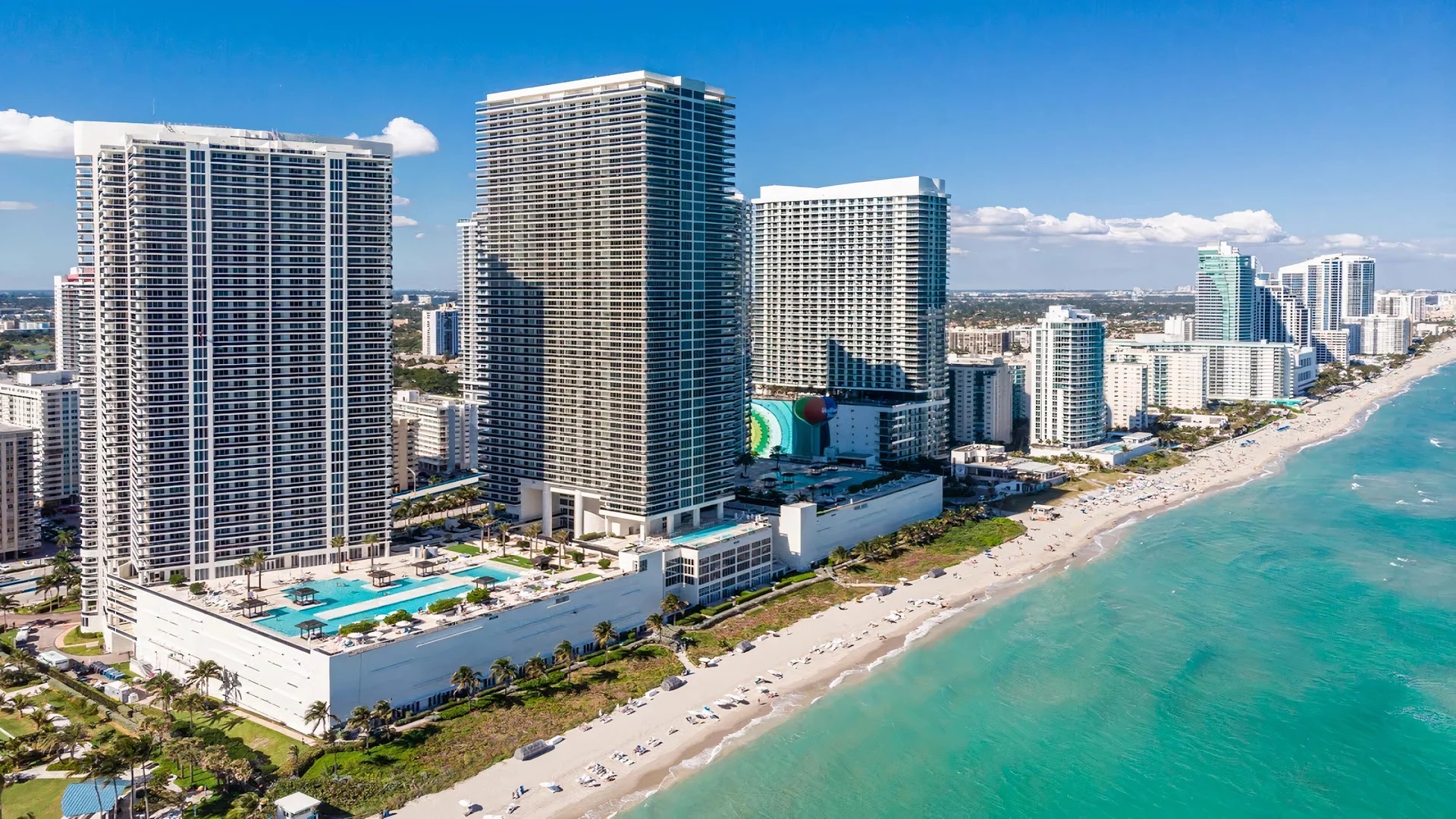
Core Planning Elements for Hallandale Beach Trade Shows
Proximity-based routing to Miami Beach Convention Center’s 500,000 square feet of display space
Integration with Broward County Convention Center’s 350,000 contiguous display square feet and expansion plans
Venue-specific freight timing and loading dock coordination across county lines
Utilization of the documented GMCVB supplier ecosystem for AV, DMC, and transportation services
Adherence to Property by Property labor instructions and event manuals
Differentiation of operational needs from nearby districts including Sunny Isles Beach and Dania Beach
Hallandale Beach in the Connected South Florida Convention Economy
South Florida’s trade show activity treats Miami-Dade and Broward as one continuous market. Hallandale Beach sits at a pivotal point where programs anchored at the Miami Beach Convention Center or the Broward County Convention Center can route displays efficiently. The Miami Beach Convention Center offers 1.4 million total square feet of meeting and event space, nearly 500,000 square feet of versatile display space, a 60,000 Square Foot Grand Ballroom, a 20,000 Square Foot Junior Ballroom, and 84 breakout rooms, setting the scale for major shows that often draw participation from northern coastal addresses.
Broward County Convention Center functions as a primary overflow and complementary venue with 350,000 square feet of contiguous display space and a 31,639 Square Foot meeting venue. Campus expansion language points toward future capacity exceeding 1.2 million square feet, reinforcing long-term planning value for exhibitors based in or routing through Hallandale Beach. The Miami Airport Convention Center adds 172,000 square feet of conference, trade show, and meeting space, including 100,000 square feet of display space and 45 breakout rooms, creating layered options for mid-sized corporate and association events.
Effective coordination requires mapping these assets against Hallandale Beach’s specific geographic position. Planners evaluate neighborhood routing, peak traffic along the coastal corridor, and each venue’s distinct loading realities rather than applying generic regional assumptions. This approach ensures display programs remain aligned with current show instructions and property-specific service levels.
Broward County Convention Center: 350,000 contiguous display square feet with documented expansion plans
Venue-Specific Operational Requirements
Each major property maintains its own event platform and manual. The Miami Beach Convention Center’s sales and services team provides contracting, room block, and logistics support that planners reference when programs originate or conclude in the Hallandale Beach area. Similar venue-managed platforms exist at the Broward County Convention Center and airport facility, each with distinct procedures for inbound freight, exhibitor move-in, and on-site services.
Coordination therefore centers on the live event paperwork rather than blanket assumptions. Planners review current exhibitor manuals for loading dock assignments, material handling rules, and designated contractor requirements. This discipline prevents misalignment between Hallandale Beach departure times and venue-specified arrival windows, particularly during overlapping major show periods.
District differentiation appears in routing details. Hallandale Beach traffic patterns differ from those in Brickell or Wynwood, requiring adjusted freight schedules when targeting the Miami Beach Convention Center versus the Broward facility. Operational nuance extends to storage timing and exhibitor-appointed contractor coordination that varies by property and show organizer.
Supplier Network and Service Coordination
The Greater Miami Convention and Visitors Bureau maintains a broad supplier directory that supports mixed-vendor execution across South Florida. Separate categories exist for audio-visual and film services, caterers, destination management companies, transportation providers, employment services, and entertainment booking. Planners draw from this ecosystem when assembling resources that comply with each venue’s approved vendor list.
Hallandale Beach programs benefit from this network depth without assuming any single provider covers every requirement. Destination management companies often handle complex multi-venue itineraries that begin or end in northern Broward while centering on Miami Beach or airport facilities. Transportation suppliers address the specific coastal routing realities that distinguish Hallandale Beach from downtown or design-district activations.
Coordination involves matching supplier capabilities against the current show’s contractor rules. This Step by Step alignment ensures AV, staging, and catering elements arrive within permitted windows and meet both venue and exhibitor standards. The ecosystem’s breadth allows flexibility when primary venues reach capacity and programs shift to overflow properties.
Audio-visual and film services
Catering and entertainment booking
Destination management companies
Transportation and employment services
Labor and Contractor Positioning in the Region
Labor, house services, and outside-vendor access remain strictly Venue Manual Driven throughout Miami-Dade and Broward. No single rule set governs the entire market. Convention centers, airport facilities, and resort-based meeting venues each publish their own instructions regarding exhibitor-appointed contractors, union jurisdictions where applicable, and permitted outside labor.
Planners treat every program as show-specific. The official documentation provided at contract stage determines whether certain tasks must use house labor, whether outside crews receive restricted access, or whether full exhibitor-appointed contractor privileges apply. This disciplined review protects compliance when displays move between Hallandale Beach and primary venues such as the Miami Beach Convention Center or Broward County Convention Center.
The mixed nature of the market rewards advance verification. Employment services listed in the GMCVB directory can supply supplemental staffing when permitted, yet final authorization always rests with the venue and show organizer. This approach maintains operational integrity across county lines and differing facility policies.
Logistics Planning for Coastal Broward Programs
Freight timing, material handling, and personnel movement require tailored planning when the origin or hotel base is Hallandale Beach. Proximity to both major convention centers allows compressed schedules compared with more distant South Florida points, yet each property’s loading dock protocols still govern acceptance windows and equipment restrictions.
Coastal corridor traffic patterns differ measurably from airport-west or downtown routes. Planners incorporate these variables when calculating departure times from Hallandale Beach to ensure compliance with the Miami Beach Convention Center’s move-in schedule or the Broward County Convention Center’s exhibitor instructions. Storage and return freight similarly follow venue-specific timelines rather than generalized regional assumptions.
Nuanced differentiation from neighboring districts such as North Miami Beach or Dania Beach appears in these logistics details. Hallandale Beach’s beachfront orientation can influence last-mile delivery windows during peak season, requiring additional buffer time when coordinating with transportation suppliers listed in the official directory.
Venue-specific loading dock and freight acceptance windows
Coastal corridor traffic and routing adjustments
Exhibitor-appointed contractor coordination per show manual
Return freight and storage timing aligned to property rules
Strategic Recommendations for Hallandale Beach Display Programs
Successful programs begin with current venue documentation rather than historical precedent. Planners first map the primary facility—whether Miami Beach Convention Center, Broward County Convention Center, or Miami Airport Convention Center—then align every element from booth design through labor and transportation to that property’s published manual. This sequence minimizes on-site adjustments and supports tighter timelines available from a Hallandale Beach base.
Layering supplier resources from the GMCVB directory adds resilience. When one category faces capacity constraints, alternative providers within the same approved ecosystem can maintain schedule integrity. The approach also accommodates the region’s spillover dynamic, where an event initially slated for one venue may shift to another with minimal disruption if coordination began from a venue-agnostic planning framework.
Finally, district-level awareness sharpens execution. Understanding how Hallandale Beach’s coastal positioning, traffic patterns, and proximity to both Miami-Dade and Broward assets differ from Midtown Miami or Coral Gables allows planners to set realistic lead times, staffing estimates, and contingency windows. The result is coordinated, compliant execution that respects the distinct operational character of each South Florida venue while leveraging the market’s documented infrastructure.
This planning discipline positions Hallandale Beach participants to compete effectively within the larger South Florida events economy without assuming uniform conditions across properties.